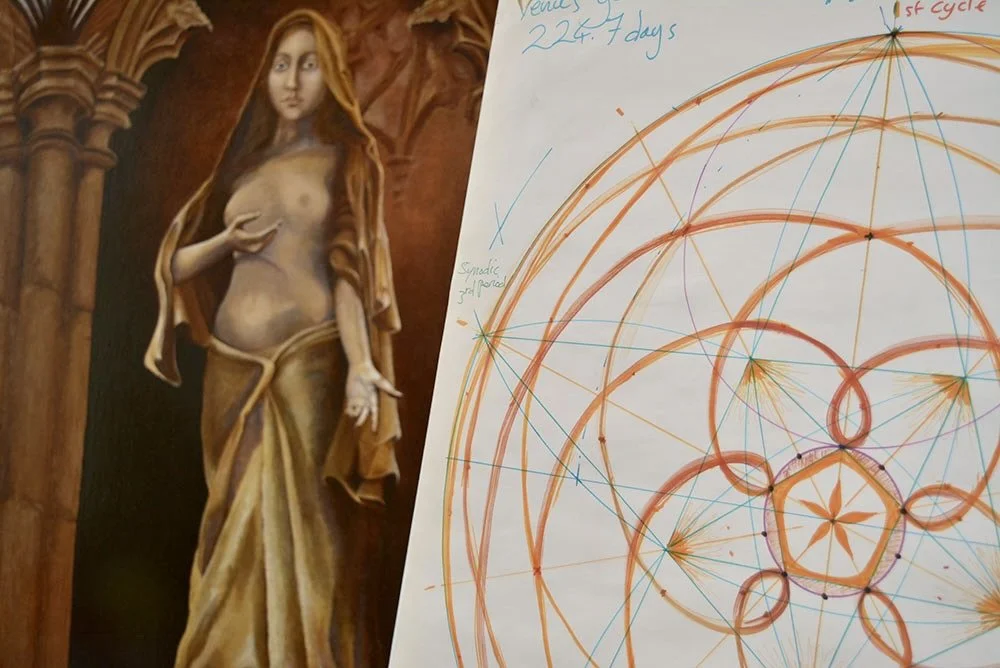
Sophia of Canterbury
process
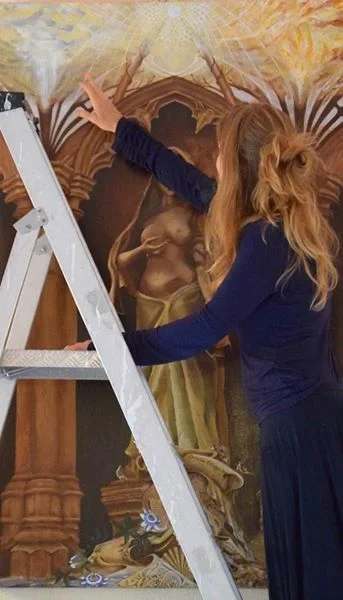
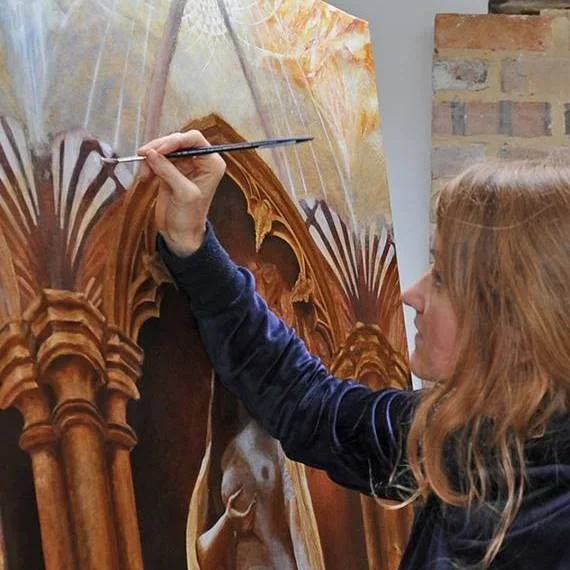
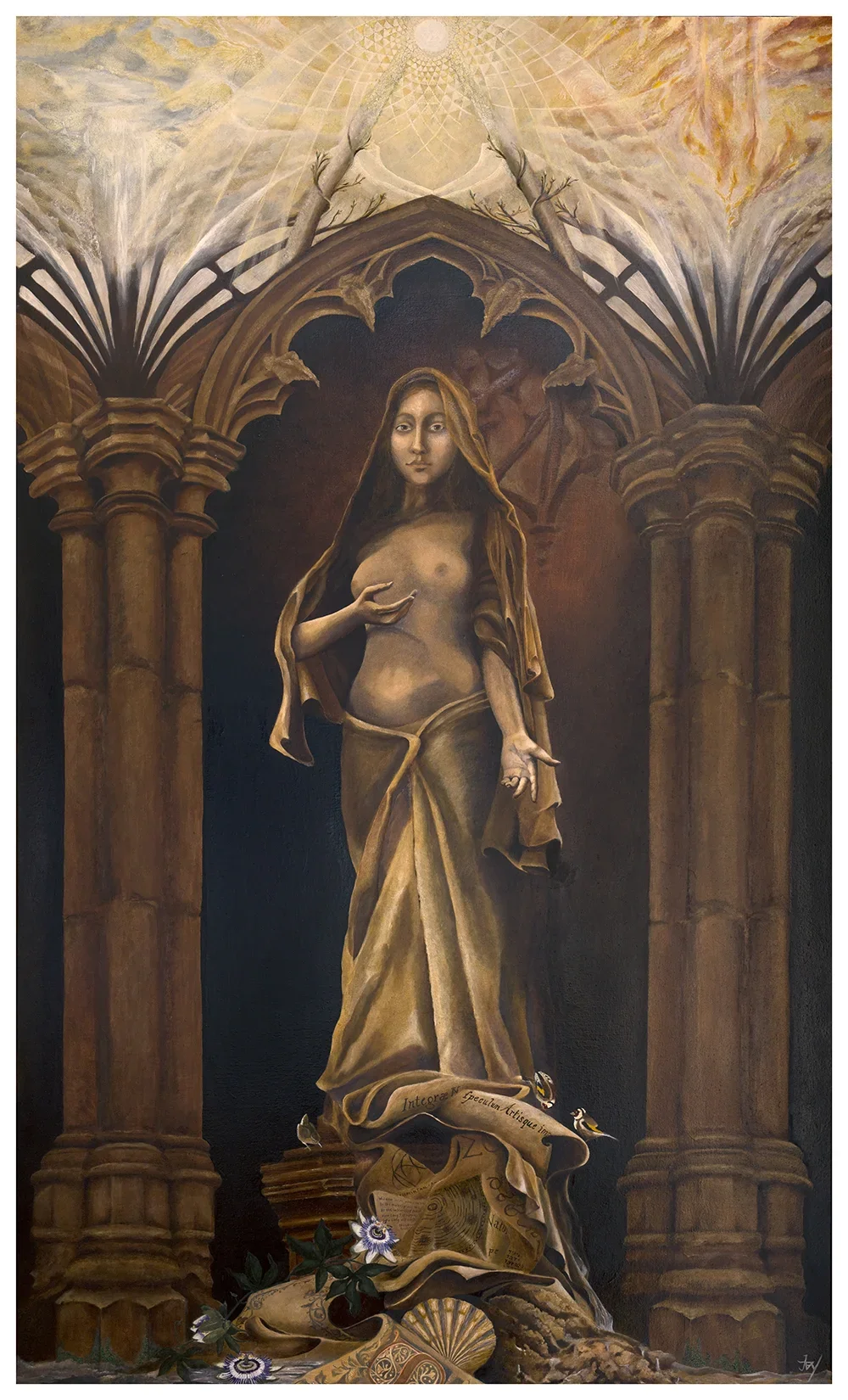
Sophia of Canterbury was inaugurated in the chapel of Christ Church University on the summer solstice of 2017. The Dean of the Chapel noted that every university needed a Sophia to guide the learning and curation of centres of knowledge. Sophia, the feminine wisdom principle generally works unseen, and yet I wished to see her and house her in Canterbury through the act of making this painting. It was in Canterbury that I was participating in the Master’s programme, Myth, Cosmology and the Sacred, a rare curricular moment that lasted 7 years ( 7= Sophia). Inspired by the theosophical writings that saw Sophia as a necessary intermediary for symbolic perception, I wished for her to have a place in that pilgrim city of old.
When Henry VIII ordered the dismantling of the tomb of Thomas Beckett, the Cathedral was stripped of all its symbols of “idolatry”. The shrine to Our Lady of the Undercroft, which was in the crypt, was also sacked. Hailed as one of the most beautiful Marian shrines in the country, the Virgin and Child was the devotional destination of many pilgrims who laid a dazzling treasury of offerings there. In the “purification” of the Reformation, Marian shrines were lost throughout the country and statues decapitated. The Undercroft became a storage space. The King’s looters and vandals danced on the grave of idolatory, and the devotional relationship to female icons was short-circuited. Visuals were no longer appropriate; everything had to become interiorised, devotional flow between outer and inner visually cauterised. In the name of enlightenment, progress and protecting the personal interests of the dominant male. Henry had no qualms about rolling the heads of his own spouses, so the decapitation of statues was just in keeping. But it seems we live in the frozen frames of the aftershock, unwittingly. I thought of all the holy wells, annexed and grown over. Declared unfit for public consumption, shielded with ivy and brambles or roads and buildings. Portals of communion and communication stifled and forgotten. Shrines desecrated and sealed over with indifference and threat of ridicule. Perhaps this is why the religion of the land feels feeble in its expression. The points where communion and interaction between the seen and unseen covered over. Threads of ruptured relationship unable to fuse together and hold the older mythos that bridges faith and land together in place.
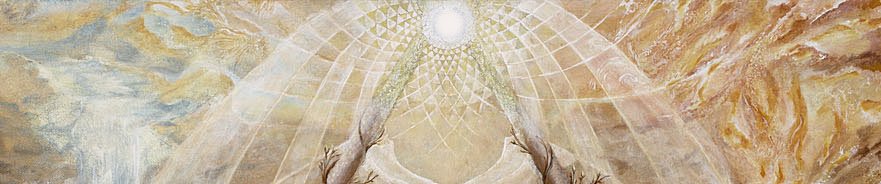
““The artist will first meditate to bring before his inner eye a vision of the symbolic building to be planned, or of the deity to be rendered. Indeed, there are legends even of entire cities envisioned in this way” ”
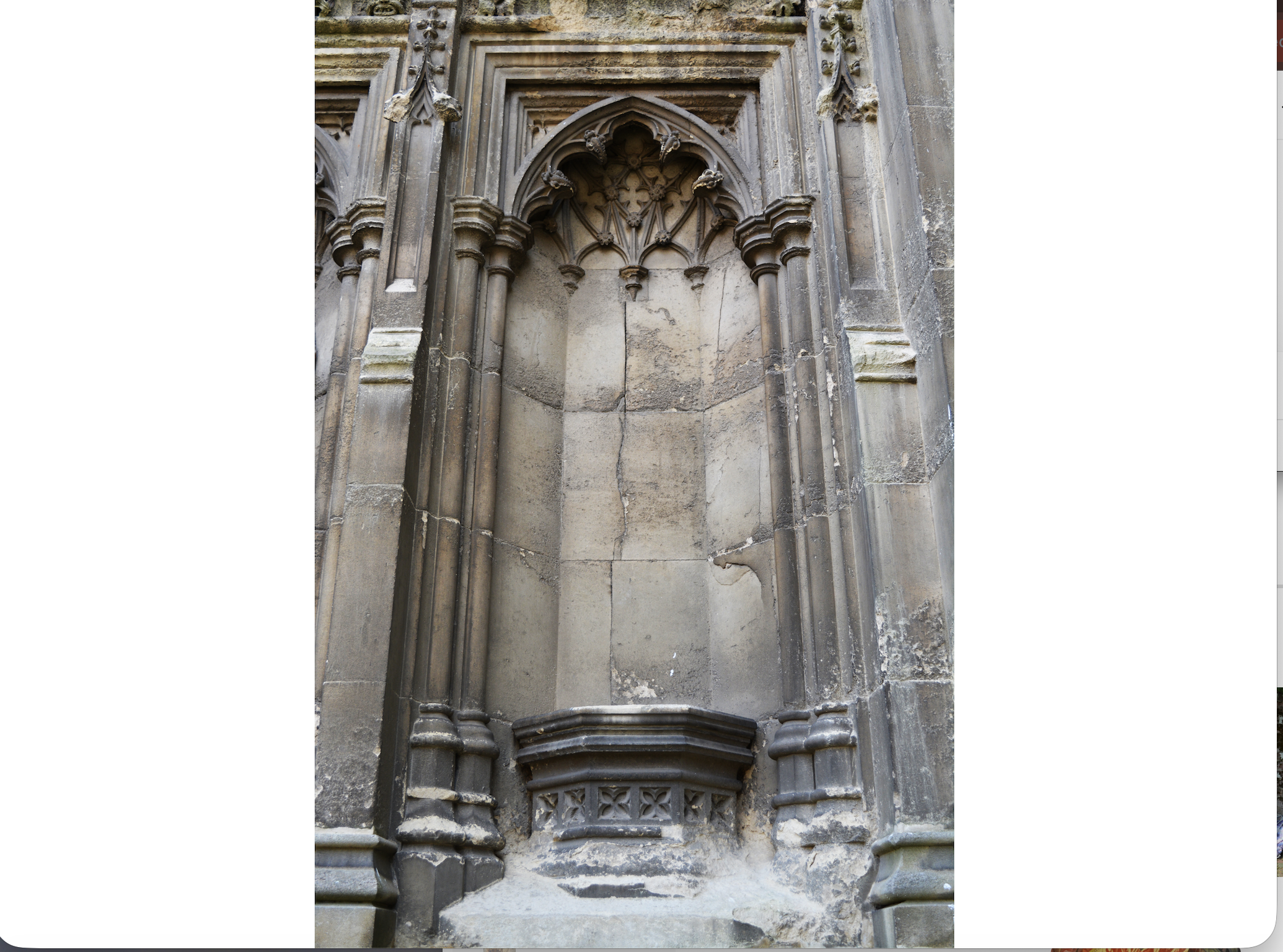
On one side of the Cathedral, I found an empty niche. I began to imagine Sophia taking her place, integrated in the Cathedral. Her presence, intrinsic to the Trinity, included in the mythical and literal tapestry of the grand building. This became the site where I would build up the image, imagining her integrated within the Cathedral and integrated within the streams of reverence of that place. I was aware that she did not need to be literalised, but it felt necessary for this embodiment to be given attention and a place. Perhaps the creative act would inspire other images of her to emerge in the city, stained glass, fountains and statues.
Arthur Versluis describes her as a “tincture that illuminates”, and so where else to administer this tincture but within the seat of Christianity in the United Kingdom
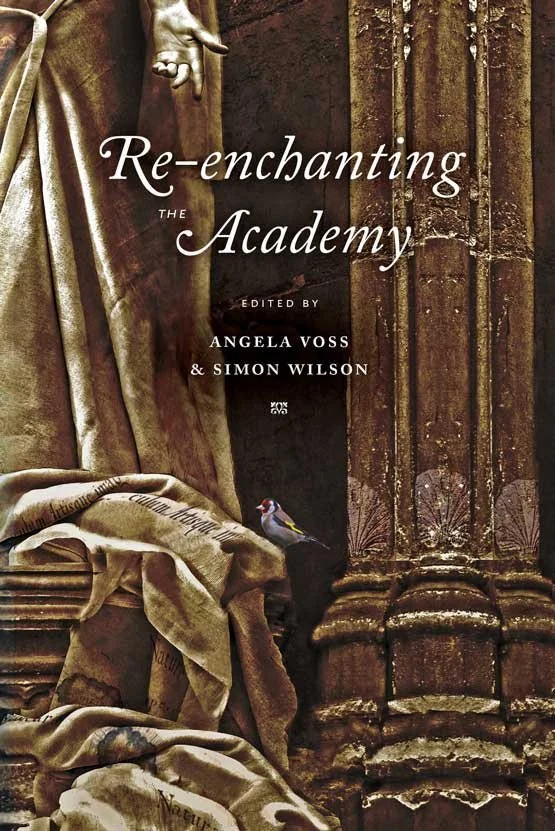
The preliminary image later became the inspiration for the cover of the anthology Re-enchanting the Academy, which was crafted with the help of my father, Derek Way. Published by Rubedo Press in 2017, you can read my penning of Chapter 11 in the Enchanting the Mind section, Enchantment and Enrichment here.
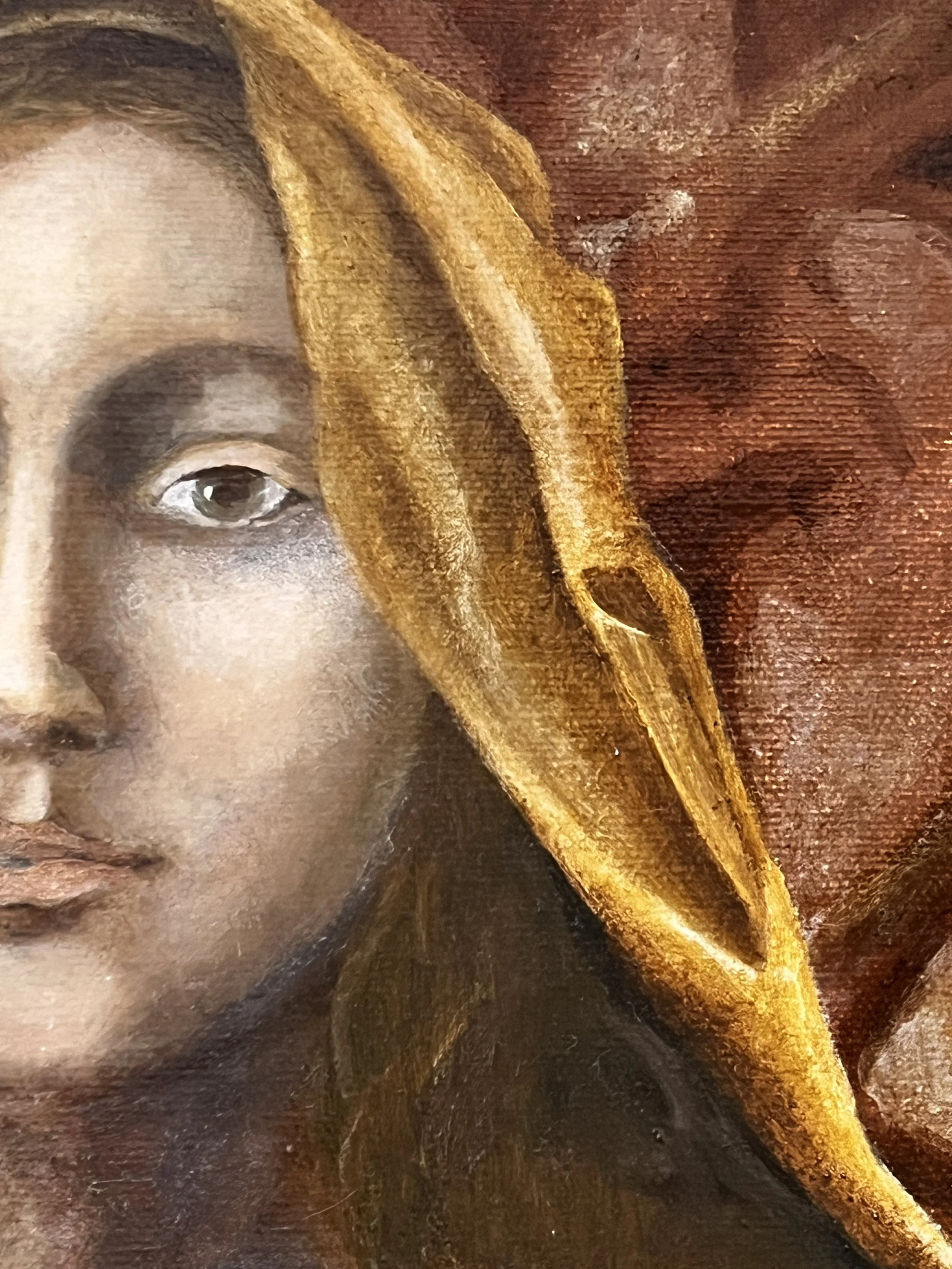
As I built up the image, I chose to depict her upper torso naked, but with a veil over her upper head. This was potentially problematic, but it was not my intention to eroticise this image of Sophia. It was to represent an image of femininity which could not fall into category. Hellenistic images of the divine had no issue with the naked form. Later, with the Fall, the naked female form has become problematic. Problems that we are not free of, despite our apparent emancipation from idolatry. In the writings of Corbin, I found assurance that this could be redeemed, as the female symbol could serve the divine as a theophanic key.
“Thus Beauty, in this context, is by no means an instrument of temptation; it is the manifestation of the Creative Feminine, which is not a fallen Sophia. The appeal addressed to her is rather an appeal to the transfiguration of all things, for Beauty is the redeemer”
If we do not address this through art, where can it be addressed? The apparent state of undress around the heart centre of the image is not a state of undress, but an acceptance of femininity that is rooted in the body and not responding to the associations of the Fall.
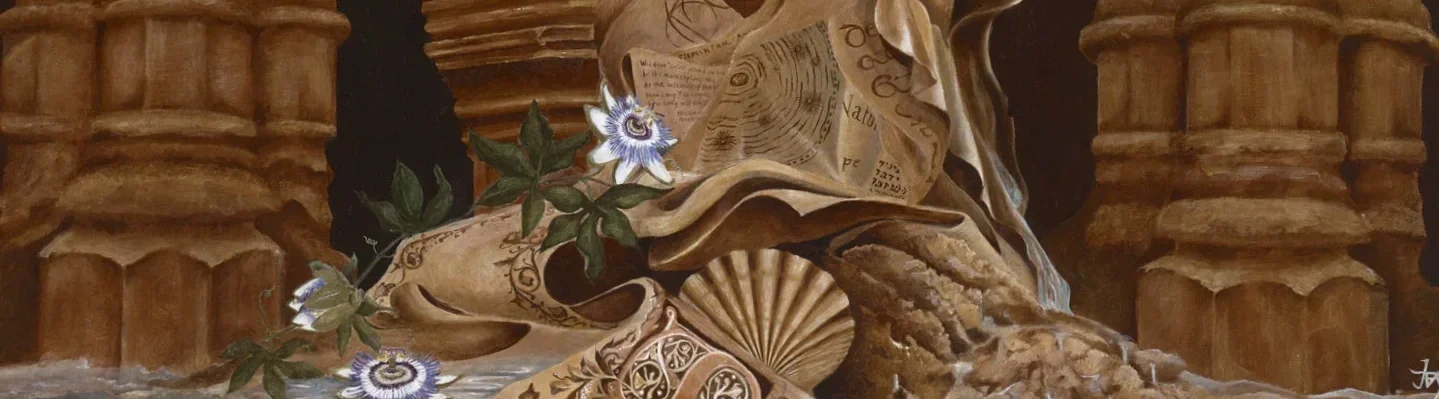
The robes she wears are vague and indistinct and are inscribed with the marks of various formulas. Fragments of alchemical diagrams, the groundplan of the Hagia Sophia, The Song of Solomon and The Book of Kells. She does not wear a definable garment, and she will not remain in a particular tradition. We are reminded of Boethius’ commentary on the state of philosophy. The garment could be torn and fragments of her stolen. However, wisdom flows through her unifying principles that permeate matter with lucidity, in doing so breaking the shell of literalism and fixity. Water flows out of the confines of the form, reinvigorating the structure where we find her.
Goldfinches and passion flowers are present at her feet, representing a bright symbolic aliveness within the Christian mythos. Her presence takes root through this effluence, beyond the institutional architecture, within her own generative impulse. Water symbolises the possibility of renewal that she brings to whichever tradition she is presenting within, and particularly, renewing the tradition of pilgrimage here in Canterbury, symbolised by the scallop shell. Known through direct symbolic perception, she can assist us to journey, as Corbin points out, the movement in the imaginal is always within a trajectory of spiritual destination. Her invitation is to perceive through the symbolic act, to navigate with one’s own active imagination.
Berwick and Baptism
There were many ways the “art” of her presence worked through my life during that time. During the MA at Canterbury, I worked for a live-in care agency in Sussex, and I was sent to care for Doreen Birks, in the village of Berwick in Sussex. I lived with her for two weeks at her house and then this continued over a year or so. I got to know Berwick, its Church, and the vicar of the Parish. Berwick church was painted by Duncan Grant, Vanessa Bell and Quentin Bell of the Bloomsbury Set in 1941 during the Second World War. They were commissioned by Bishop Bell of Chichester, who felt passionately that a synthesis between art and the church was necessary for renewal.
“It is a common place that we are living now in the midst of a great spiritual crisis. I believe that the Church and the Artist together have a great contribution to make to mankind, not least England, in relation to it. What we all need, what the world needs is Order, a Pattern, a sense of purpose, a Philosophy, a Faith. The Church has a Faith, and the artist with his vision has the genius and the capacity to meditate Order and to represent that Faith. Certainly, the Church needs the Arts very badly... I want to see Art playing a much larger part in people’s lives, and I also want to see religion making a much larger contribution to the tradition and atmosphere in which people live ”
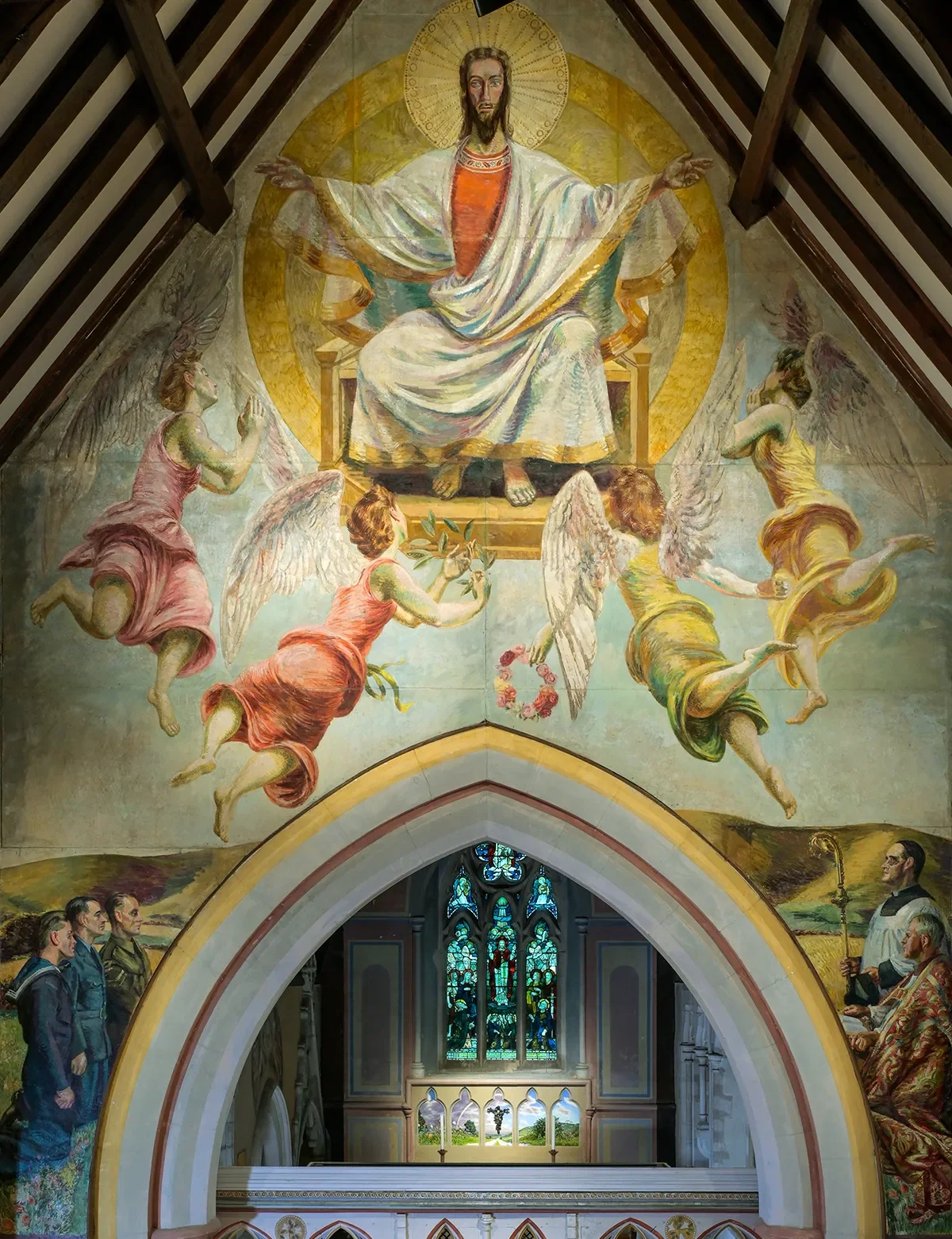
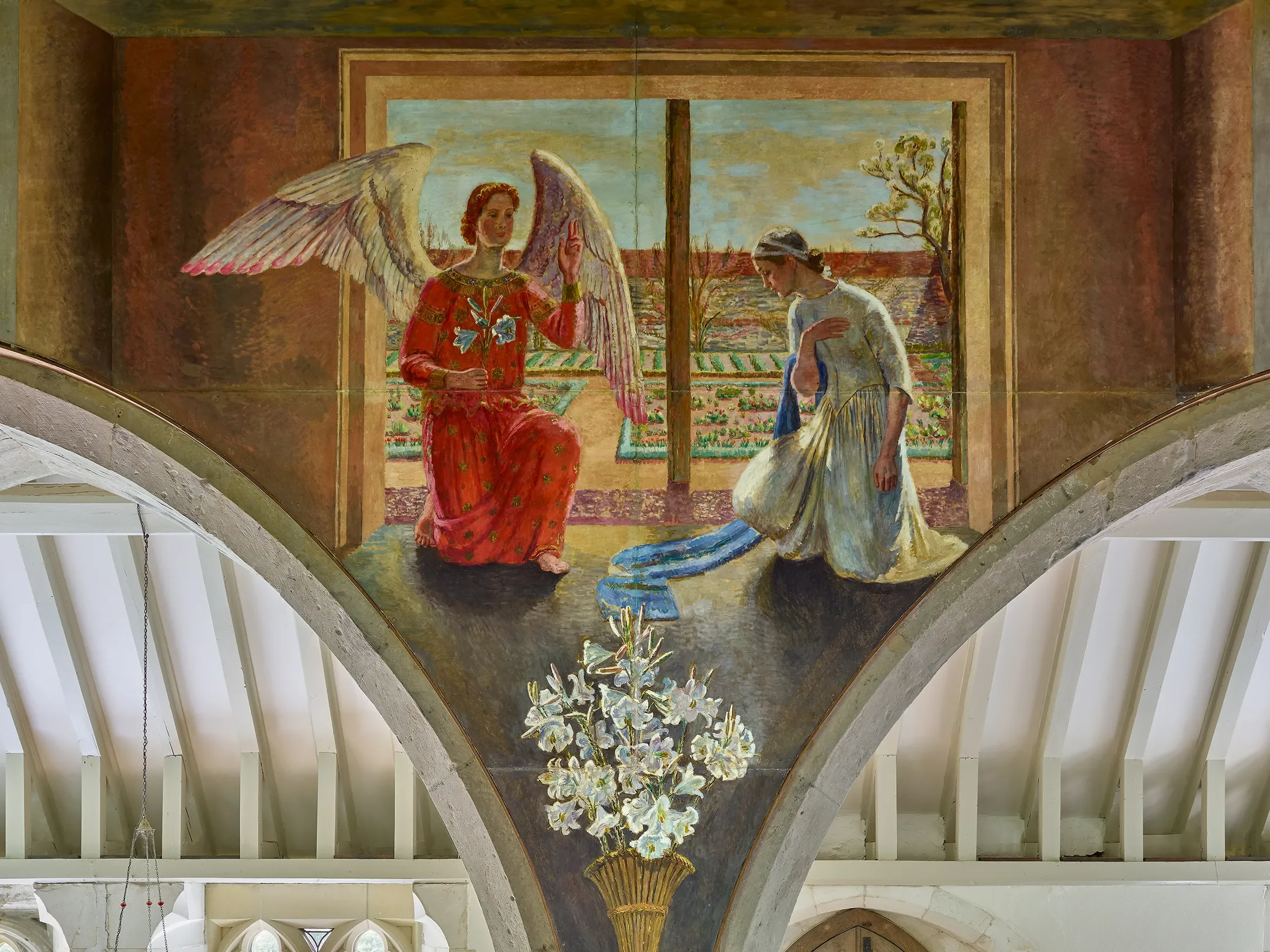
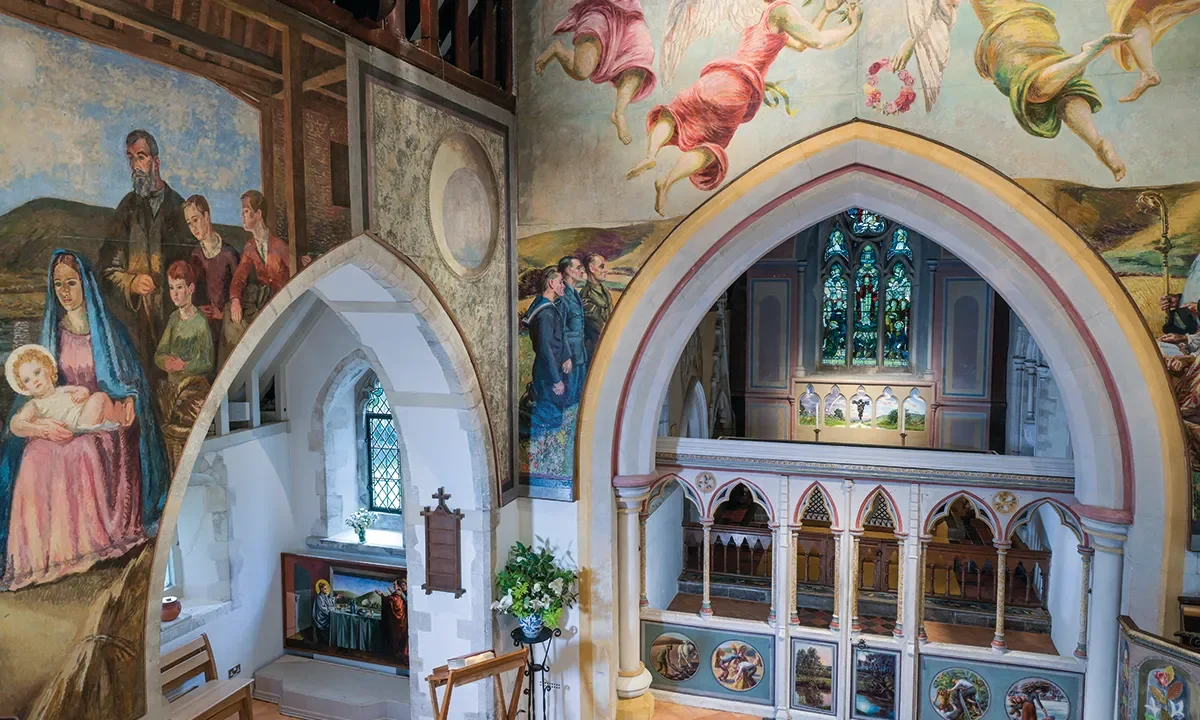
It was a radical move as the Bloomsbury artists were permitted to decorate the whole interior of the historic church. Living close by in Charleston Farmhouse made them locals, but their unconventional lifestyles also set them apart from general conservatism. They included local characters in the friezes, featuring the faces of some of the local residents who were killed in active service. The church contains the work of Julian Bell, grandson of Vanessa Bell and is a dedicated space for the preservation and expression of art and poetry in the region. The depictions are simple and generate a sense of local, they feel very “of the place”. Seven ancient rural churches in the area are connected via the Cuckmere pilgrims’ route as they spread out across the Downs like small gem-like places of Christian worship, nestled into the landscape. I met Reverend Peter Blee on my first night in Berwick when we came unstuck attempting to get Doreen into her four-poster bed. She called the vicar on the landline, and he came to help. I was impressed by the tight weave of this small place and its extraordinary parish. Over time, as I continued my station there, I learned more from Peter and came to a point where I felt moved to participate in the communion at the church and so be baptised. So it was within this period of time, when I was painting the Sophia image, that it felt no longer appropriate to comment on the faith from the outside, but to enter into it in order to swim in the stream. It was with a lot of kindness that I was received into the fold, being baptised at Alfriston Church, built in 1307, known as the Cathedral of the Downs.
This was an interesting working of circumstances, bringing me into communication with a Christian community, and one in which the central place of worship was dedicated to the fusion of art and faith and connected to pilgrimage routes. I felt that my concepts and opinions about Christianity in England were tempered through the daily life of caring for someone, existing in a community, and communing with that place and land. Wearing away the self-righteousness that comes from crusading, rather than connecting. At night, after Doreen had gone to bed, I would have an hour to unwind by the ancient fireplace. Sitting there next to the embers in that 17th-century converted cottage, you could dive into the deep loric space of Beyond Berwick. That which existed before Vanessa Bell and Virginia Woolf, before the Church; the deep welling up of the land which stretched out across the undulations of the Downs. Life gave me a transient appointment there, connecting with the lace-like web of kindness that is enacted in those churches that sit quaintly in the folds of that stretch of pilgrim-worthy land.
I felt like I was working on Sophia as a subject, but I could also see how this stream of enquiry was working on me. The way I experienced this working on me was through shifts in my perception within the parameters of my daily life. So often I have been reaching externally, for entrance into those lofty places. Here it was in the daily acts, the routine, the ordinary that I was informed. Between time in Berwick, I would work on the painting and completing the writing for the MA. The creative act was a honing of desire and attention to bring life into accord with wisdom. As such, it is not a work of art but a work of life. My intention was that the image could stimulate that process in others. Pilgrim’s passing through, gaining a window into her presence, where they could accept her invitation, and walk with her a while.